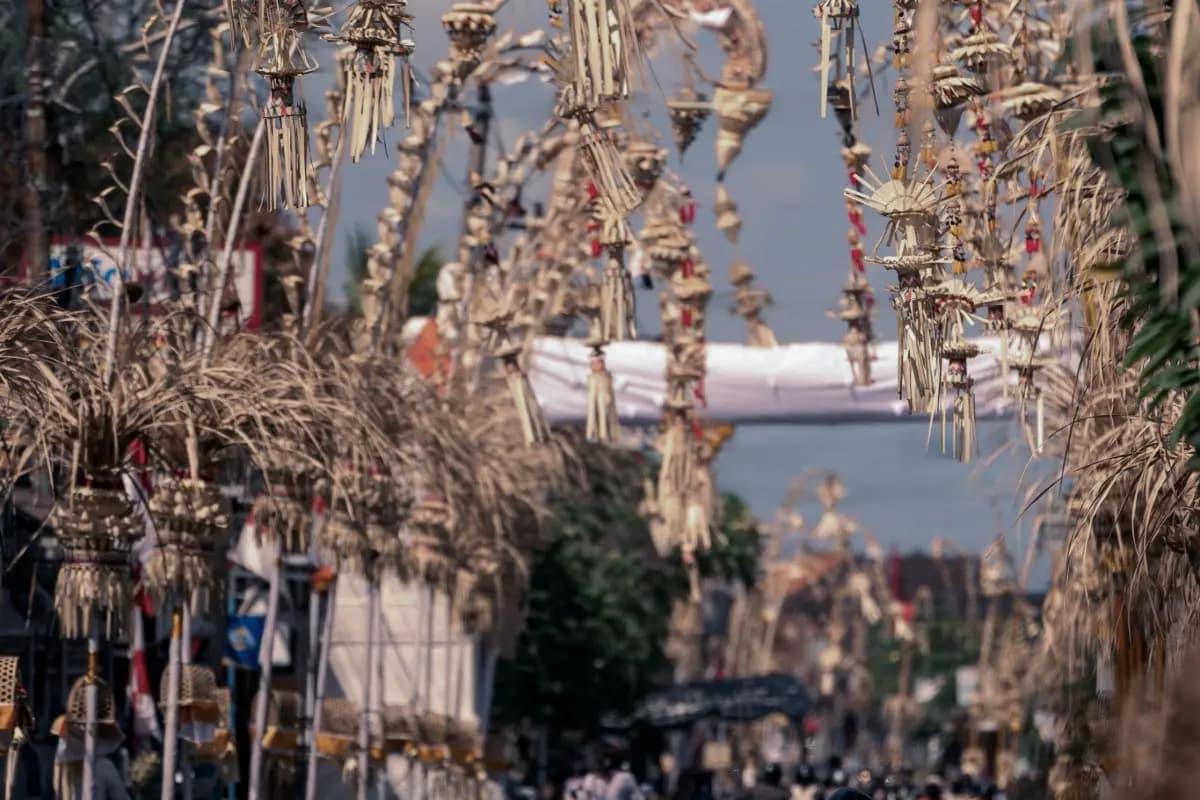
Galungan is one of the most important religious celebrations for Hindus in Bali. When this holy day arrives, the atmosphere across the island transforms completely, becoming more sacred, vibrant, and colorful. Streets and the entrances of local homes are adorned with beautiful Penjor, ornately decorated bamboo poles that symbolize prosperity and gratitude.
This year, Galungan will be celebrated on June 17, 2026, marking a special occasion not only for the local Hindu community but also for visitors from around the world. If you’re planning to visit Bali during this festive period, it’s worth learning more about Galungan and its significance to experience the celebration in a more meaningful and respectful way.
What Galungan Actually Celebrates
The Galungan ceremony is a sacred holiday celebrated by Balinese Hindus to commemorate the victory of righteousness (Dharma) over evil (Adharma). The celebration takes place every 210 days, according to the traditional Balinese calendar.
Historical records suggest that Galungan was first celebrated on the full-moon night of the 15th day of the Saka year 804 (882 CE). The tradition was later discontinued for a period before being revived by King Sri Jayakasunu, who ruled Bali in the Saka year 1126 (1204 CE).
Galungan is closely associated with the victory of Lord Indra over Mayadenawa, symbolizing the triumph of good over evil. Balinese Hindus believe that during Galungan, the spirits of their ancestors return home, making it an important time to honor and welcome them through prayers, offerings, and religious ceremonies.
At its core, Galungan serves as a reminder for individuals to overcome negative desires and impulses that can disrupt inner peace and balance in life. The celebration encourages self-reflection, spiritual growth, and the pursuit of harmony between oneself, others, and the divine.
How the Balinese Calendar Determines Galungan Dates
After learning about what Galungan is in Bali, it’s also interesting to understand how the date of this celebration is determined. Unlike most public holidays, which fall on a fixed date each year, the date of Galungan changes each year on the standard calendar.
This is because Galungan is based on the traditional Balinese Pawukon calendar, which follows a 210-day cycle. Since this cycle is shorter than the standard calendar year, the celebration falls on different dates each year and can even occur twice within the same year.
So, when is Galungan in Bali this year? Balinese Hindus will celebrate Galungan on June 17, 2026. The holiday will be followed by several related observances, including Kuningan Day, which falls on June 27, exactly ten days after Galungan.
The Days That Lead Up to Galungan
The days leading up to the Galungan are just as important as the holiday itself for the Balinese Hindu community. The preparations begin 25 days beforehand and consist of several sacred religious observances that hold deep spiritual significance.
For a better understanding, here are the important days that lead up to the Galungan ceremony:
- Tumpek Wariga (25 days before): This holy day is dedicated to honoring plants and nature. Balinese Hindus worship Lord Sangkara, the deity associated with fertility and prosperity, by presenting offerings to trees and plants while praying for their growth and abundance.
- Sugihan Jawa (6 days before): A day dedicated to purifying the universe (Bhuana Agung). Balinese Hindus perform cleansing rituals to neutralize negative energies, including purifying family temples and homes in preparation for the days ahead.
- Sugihan Bali (5 days before): This day focuses on self-purification (Bhuana Alit). People cleanse themselves physically and spiritually through ritual bathing and prayers, symbolizing the purification of both body and soul before the celebration.
- Penyekeban Day (3 days before): A time for self-restraint and reflection. Balinese Hindus are encouraged to control their desires and emotions in order to welcome the celebration with a clearer and more peaceful mind.
- Penyajan Day (2 days before): This day is dedicated to strengthening one’s determination and self-discipline while resisting temptations. Families also begin preparing various ceremonial items and traditional offerings that will be used during the upcoming observances.
- Penampahan Day (1 day before): On this day, many families traditionally prepare food for the festivities, including the ceremonial slaughter of pigs, which symbolizes the triumph over negative traits and animalistic instincts. It is also when beautifully decorated Penjor bamboo poles are erected in front of homes as a symbol of gratitude and devotion.
Galungan Day: What the Island Looks Like at Dawn
The Galungan celebration in Bali in 2026 will soon arrive, bringing a vibrant and spiritual atmosphere to the island. As one of the most important religious celebrations for Balinese Hindus, Galungan marks the triumph of good over evil and is believed to be the time when ancestral spirits return to earth to bless their descendants.
During this sacred occasion, locals take time for self-reflection, prayer, and spiritual renewal. Religious observances typically begin at family shrines (Sanggah) before continuing to village temples and other sacred sites across the island. Many Balinese Hindus also wear traditional white and yellow attire while participating in ceremonies and prayers, and it is common to see families traveling together to temples while carrying colorful offerings.
Another meaningful tradition during Galungan Day in Bali is Ngejot, where families share food and traditional cakes with relatives and neighbors as a symbol of gratitude and togetherness. This spirit of generosity and community is one of the reasons why the celebration feels so warm and welcoming.
As the festivities unfold, Bali transforms into a truly breathtaking sight. Elegant Penjor bamboo poles line roads, villages, and city streets, while worshippers carrying colorful offerings make their way to temples throughout the day.
The scent of incense fills the air, accompanied by the soothing sounds of traditional Balinese gamelan music. For visitors, experiencing Galungan firsthand offers a rare opportunity to witness Bali’s rich cultural heritage and spiritual traditions, making any trip to the island even more memorable.
Umanis Galungan and the Ten Days That Follow
After Galungan is celebrated, the festivities continue for several more days until Kuningan Day, which takes place 10 days later. Here are some of the important observances during this period:
- Umanis Galungan (1 day after): Balinese Hindus perform prayers, take part in Dharma Santi gatherings, and often spend time visiting relatives, friends, or local attractions.
- Pemaridan Guru (2 days after): This day is dedicated to seeking blessings and guidance from Ida Sang Hyang Widhi Wasa in the manifestation of Sang Hyang Guru, who is believed to provide wisdom and direction in life.
- Ulihan (3 days after): On this day, ancestral spirits and deities are believed to return to the heavenly realm after visiting the earthly world, leaving behind blessings and protection for their descendants.
- Pemacekan Agung (4 days after): This observance encourages spiritual strength, self-discipline, and steadfast faith while resisting negative influences and temptations.
- Kuningan Day (10 days after): As the final major celebration in the festive cycle, Kuningan marks the conclusion of the sacred observances. Balinese Hindus offer prayers and present yellow rice (nasi kuning) and other offerings as symbols of prosperity, gratitude, and divine blessings.
Kuningan: The Farewell Morning
Ten days after Galungan, Balinese Hindus celebrate Kuningan Day, which marks the conclusion of the sacred festive period. Although closely connected, Galungan and Kuningan are two distinct religious celebrations, each with its own meaning and traditions.
While Galungan commemorates the triumph of good over evil, Kuningan is believed to be the day when ancestral spirits and deities return to heaven after visiting the earthly world during the celebration period. As a result, the holiday carries a strong sense of gratitude, farewell, and spiritual reflection.
One of the most distinctive features of Kuningan is its vibrant yellow theme, which symbolizes prosperity, happiness, and well-being. Visitors will notice yellow-colored offerings throughout the island, including nasi kuning, tumpeng, and ketupat kuning, which are presented as expressions of gratitude and devotion.
On this day, locals dress in traditional Balinese attire and perform prayers with their families. Religious observances are traditionally completed before midday, as many believe that ancestral spirits and deities return to the heavenly realm after noon.
Despite marking the end of the festive period, Kuningan remains a vibrant and lively occasion across the island. Penjor bamboo poles continue to decorate homes and streets, while worshippers carrying colorful offerings can be seen making their way to temples for prayers and ceremonies with their families.
What You Will Actually See as a Visitor
Penjor Poles and What They Symbolize Street by Street
One of the first things you’ll notice when visiting Bali during the Galungan festival is the sight of towering Penjor lining roads and village streets across the island. These gracefully curved bamboo poles are decorated with coconut leaves, woven ornaments, and traditional offerings, creating a festive yet sacred atmosphere wherever you go.
More than just beautiful decorations, Penjor carry deep spiritual meaning for the Balinese Hindu community. They symbolize gratitude for prosperity and blessings, represent Bali’s sacred mountains, and serve as a reminder of the triumph of good over evil, which is the central theme of the Galungan celebration.
Temple Offerings, Gebogan Towers, and Canang Sari
Another distinctive feature of the celebration is the abundance of offerings found throughout the island. Among the most common are Canang Sari, the daily offerings used in Balinese Hindu rituals, and Gebogan, beautifully arranged towers of fruits and other offerings that symbolize devotion and gratitude.
These offerings are much more than decorative displays. They represent sincere gratitude to Ida Sang Hyang Widhi Wasa for the blessings received and serve as an expression of faith and devotion. They also reflect the spiritual values celebrated during Galungan, including harmony, gratitude, and the victory of righteousness over negative forces.
Traditional Dress, Gamelan, and the Atmosphere in Villages
Balinese villages transform into living canvases of culture, filled with vibrant colors, traditions, and breathtaking sights. The atmosphere feels deeply festive, warm, and spiritual, giving you a unique opportunity to experience one of Bali’s most important celebrations firsthand.
You’ll be surrounded by the soothing sounds of traditional gamelan music, rows of beautifully decorated Penjor lining the streets, and locals dressed in their finest traditional Balinese attire as they take part in prayers and ceremonies throughout the day.
Balinese men typically wear a collared shirt paired with a patterned kamen and an udeng headcloth, while women are often seen wearing an elegant lace kebaya matched with a kamen and a sash.
Where in Bali Galungan Feels Most Immersive
Ubud and Central Bali Villages
The Galungan festival in Ubud, Bali, offers a truly magical experience. Already known for its lush landscapes, rice terraces, and spiritual atmosphere, Ubud becomes even more beautiful during the celebration as centuries-old traditions come to life across the region.
As Bali’s cultural and artistic center, Ubud is one of the best places to experience the festive season. Everywhere you go, from the town’s main streets to quiet paths winding through the rice fields, you’ll find elegant Penjor swaying gently in the breeze. Combined with the area’s natural beauty and strong cultural heritage, they create a scene that feels both sacred and unforgettable.
Penglipuran Village in Bangli
The traditional village of Panglipuran in Bangli offers one of the most memorable places to experience Galungan in Bali. Known for its well-preserved culture and picturesque surroundings, the village becomes even more vibrant during the celebration, creating an immersive and authentic cultural experience.
As the festive season arrives, Panglipuran’s charming streets are lined with beautifully decorated Penjor, adding a sacred and colorful touch to the village’s already stunning scenery. One of the highlights is the Ngererab tradition, a lively procession in which villagers and Barong figures parade through the village in the afternoon.
The combination of cultural performances, community participation, and festive energy makes it an excellent destination if you want to experience Galungan at its most vibrant.
Jimbaran, Seminyak, and South Bali During the Festival
The western part of Bali, known for its vibrant coastal lifestyle and beachside energy, transforms into a completely different atmosphere during Galungan. What is usually a lively tourist area filled with movement and entertainment becomes more sacred, calm, and spiritually meaningful.
Along the coastline, the celebration blends with the soothing sound of crashing waves, creating a unique harmony between nature and tradition. The entire area feels more serene and reflective, offering a different side of Bali that is rarely seen on ordinary days.
Many roadside shops either close for the day or operate only briefly, as owners and staff take part in temple prayers and family ceremonies. The streets are lined with beautifully decorated Penjor, while locals in traditional attire move together with their families toward nearby temples to pray and take part in the celebrations.
East Bali and Quieter Alternatives for Deeper Immersion
If you are looking for a more peaceful atmosphere, you can head to East Bali for a more authentic spiritual experience during Galungan. This region is generally quieter, offering a slower pace that allows you to fully absorb the sacred ambiance of the celebration.
Here, you can explore traditional villages where local culture remains well preserved and experience Galungan in a more intimate and genuine setting.
What Tourists Should Know Before Visiting During Galungan
- General atmosphere: During Galungan, Bali becomes much busier as communities across the island take part in religious ceremonies, family gatherings, and various cultural traditions. This is one of the best times to experience the island’s spiritual and cultural life firsthand.
- Atmosphere and food: Streets throughout Bali are decorated with beautiful Penjor as symbols of gratitude and prosperity. You’ll also find a variety of traditional Balinese dishes being prepared and served in homes and local restaurants, including lawar, babi guling, and jaja Bali.
- Transportation: Roads are generally busier than usual, especially in the morning when many locals head to temples or visit relatives. Ride-hailing services may take longer to arrive due to increased traffic and ceremonial activities.
- Business activities: Many family-owned shops, warungs, and local businesses may close temporarily while owners participate in religious observances. However, most restaurants, shops, and tourism-related businesses in popular tourist areas remain open as usual.
- Cultural etiquette: If you plan to visit a temple, be sure to wear respectful attire such as a sarong and sash. Avoid stepping on ritual offerings, and always ask for permission before taking photos of people participating in prayers or ceremonies.
Practical Tips for Tourists During Galungan
- Wear modest clothing, especially when entering temple areas or villages holding ceremonies. You can wear a sarong, sash, and make sure your shoulders are covered.
- Never step on or walk over a canang sari placed on the ground. Always walk carefully and respectfully around these offerings.
- If you want to take photos of people praying or during ceremonies, always ask for permission first and avoid using flash during rituals.
- Roads can be very crowded, and some routes may be closed during the festival, so it is highly recommended to book transportation or tours in advance.
- Keep your travel schedule flexible to avoid traffic delays and sudden route changes during the celebration period.
The Galungan Period as a Reason to Come to Bali
Bali always offers beauty and uniqueness throughout the year, but visiting during the Galungan celebration makes your experience on the island even more immersive, sacred, and unforgettable.
If you’re planning a trip or simply want to understand more about Bali’s cultural traditions, you can explore more guides and stories about the Galungan holiday and other local insights on Wonderspace.